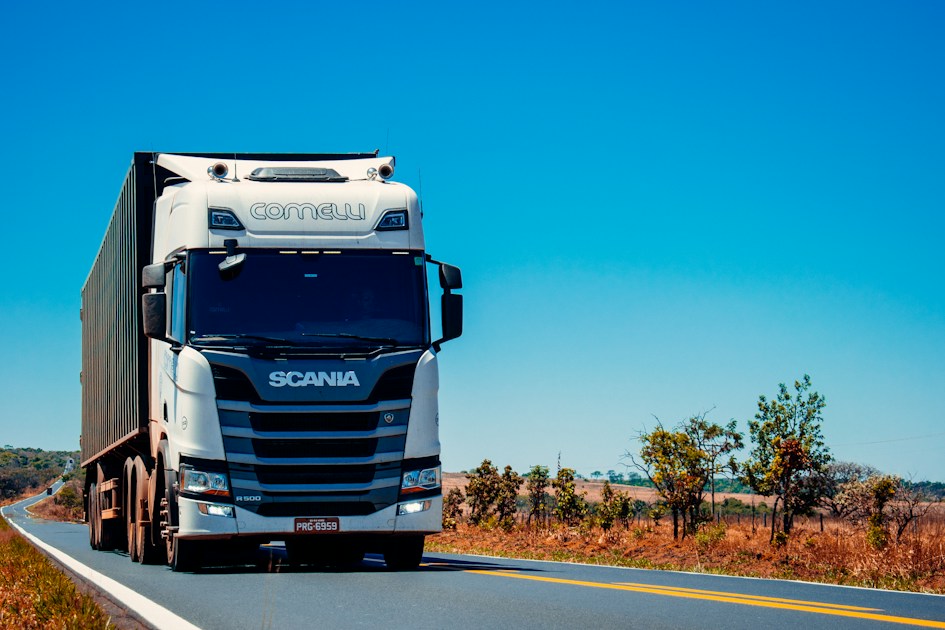
What is Full Truck Load vs Part Load: Which is Cheaper for Your Shipment?
Understanding Full Truck Load and Part Load Transportation Choosing between Full Truck Load and Part Load transportation significantly impacts your shipping costs. Many businesses and individuals unnecessarily pay for entire truck capacity when their goods only need partial space, wasting money on...
Key Takeaways
- Understanding Full Truck Load and Part Load Transportation
- What is Full Truck Load Transportation
- Key Characteristics of FTL
- FTL Pricing Structure
- What is Part Truck Load Transportation
Understand the difference between FTL and PTL transportation. Learn when part load saves money, how advance booking reduces costs, and how ShiftingApp matches your goods to the right option.
Understanding Full Truck Load and Part Load Transportation
Choosing between Full Truck Load and Part Load transportation significantly impacts your shipping costs. Many businesses and individuals unnecessarily pay for entire truck capacity when their goods only need partial space, wasting money on unused capacity. Understanding these options helps you optimize transportation costs based on actual shipment volume.
This guide explains the fundamental differences between FTL and PTL, when each option makes financial sense, how advance booking secures better rates, and how ShiftingApp intelligently matches your shipment to the most cost-effective transportation solution.
What is Full Truck Load Transportation
Full Truck Load means you book an entire vehicle exclusively for your shipment regardless of whether your goods completely fill the truck capacity. The vehicle travels directly from your pickup location to delivery destination without stops for other customers.
Key Characteristics of FTL
When you book Full Truck Load, the entire vehicle is dedicated to your shipment only. The truck departs when you are ready and travels directly to your destination. No other customer goods share the vehicle space. Loading and unloading happen only at your specified locations. You pay for the complete vehicle capacity whether you use it fully or partially.
FTL is ideal when you have enough goods to fill 70 percent or more of truck capacity, need faster delivery with direct transportation, transport time-sensitive or perishable goods, ship fragile items requiring careful handling, or prefer exclusive vehicle control without sharing space.
FTL Pricing Structure
Full Truck Load pricing is based on vehicle size and distance traveled, not actual goods weight or volume. Whether you load 2 tons or 8 tons in a 10-ton capacity truck, the transportation cost remains the same.
Typical FTL rates in India range from Rs 8 to Rs 12 per kilometer for small trucks up to 3 tons capacity, Rs 12 to Rs 18 per kilometer for medium trucks of 7 to 9 tons capacity, and Rs 18 to Rs 25 per kilometer for large trucks above 12 tons capacity.
Distance also affects per-kilometer rates. Longer distances generally have lower per-kilometer costs due to better fuel efficiency and reduced proportional loading time.
What is Part Truck Load Transportation
Part Truck Load means your shipment shares vehicle space with other customers goods traveling the same or similar routes. You pay only for the space your goods occupy, not the entire vehicle capacity.
Key Characteristics of PTL
In Part Load transportation, multiple customers share one vehicle. Each pays proportional to their goods volume or weight. The truck makes multiple pickup and delivery stops for different customers. Transit time is longer than FTL due to multiple stops. You share vehicle space but goods remain segregated and clearly labeled.
PTL works well when your goods occupy less than 60 percent of truck capacity, delivery timeline is flexible allowing 1 to 2 extra days, cost savings are more important than speed, goods are not highly time-sensitive, or shipment does not require exclusive handling.
PTL Pricing Structure
Part Load pricing is based on actual goods weight or volume, whichever is higher. You pay proportional rates for the space occupied rather than full vehicle cost.
Transporters calculate chargeable weight using the higher of actual weight or volumetric weight. Volumetric weight equals length times width times height in centimeters divided by 5000. This prevents abuse where light but bulky goods occupy disproportionate space.
Typical PTL rates range from Rs 4 to Rs 8 per kilogram depending on distance, route popularity, and urgency. These rates are significantly lower than booking an entire truck for small shipments.
Cost Comparison: When Part Load Saves Money
Understanding when Part Load offers better value than Full Truck Load helps optimize your transportation budget.
Example 1: Small Business Furniture Shipment
A furniture retailer needs to ship 1.5 tons of chairs from Delhi to Jaipur, approximately 280 kilometers. The goods occupy about 40 percent of a medium truck capacity.
Full Truck Load option requires booking an entire medium truck at Rs 15 per kilometer. Total cost equals 280 kilometers times Rs 15 which is Rs 4,200 for the complete vehicle regardless of partial usage.
Part Load option charges based on actual weight at Rs 6 per kilogram. Total cost equals 1,500 kilograms times Rs 6 which is Rs 9,000 for just the space used. Wait, this seems higher initially.
However, Part Load also factors in volume pricing. If the chairs are bulky with significant air space, volumetric weight might be 2,500 kilograms. Even at Rs 6 per kilogram volumetric, that is Rs 15,000.
Actually for this specific case with 280 kilometers, the FTL at Rs 4,200 is more economical if departure timing is flexible. But if the furniture can wait 2 days for a shared truck going to Jaipur anyway, Part Load might negotiate down to Rs 3,500 for the shared space.
Let me recalculate with realistic Part Load structure. For 280 kilometers at Part Load rates of approximately Rs 2,500 to Rs 3,000 for 1.5 tons on this popular route with shared capacity, you save Rs 1,200 to Rs 1,700 compared to dedicating an entire truck.
Example 2: E-commerce Inventory Shipment
An online retailer ships 800 kilograms of clothing from Mumbai to Bangalore, approximately 1,000 kilometers. The goods occupy roughly 25 percent of truck space.
Full Truck Load booking requires a medium truck at approximately Rs 15 per kilometer for 1,000 kilometers equaling Rs 15,000 for exclusive vehicle.
Part Load charges Rs 5 per kilogram for this route and weight. Total cost equals 800 kilograms times Rs 5 which is Rs 4,000 for shared space.
In this scenario, Part Load saves Rs 11,000 which is 73 percent cost reduction compared to booking full truck for partial goods. The trade-off is delivery takes 4 to 5 days instead of 2 to 3 days with FTL.
For non-urgent inventory replenishment, this massive saving justifies the slightly longer transit time.
Break-Even Point Between FTL and PTL
Generally, Part Load becomes more economical when your goods occupy less than 60 to 70 percent of available truck capacity. Below this threshold, paying for unused space in FTL wastes money.
The exact break-even point varies by route, distance, and goods type. Popular routes with frequent Part Load services offer better PTL rates due to easy consolidation. Remote routes might have limited Part Load availability making FTL more practical despite partial loads.
How Advance Booking Reduces Transportation Costs
Booking transportation well ahead of your shipping date provides significant cost advantages for both FTL and PTL options.
Better Rate Negotiations
Transporters offer discounts for advance bookings because early commitments help them plan vehicle allocation, optimize route scheduling, and reduce empty return trips. These operational efficiencies translate to lower prices for customers.
Booking 15 to 20 days ahead typically saves 10 to 15 percent on standard rates. Booking 30 days or more in advance can reduce costs by 20 to 25 percent, especially during off-peak seasons.
Last-minute bookings attract urgency premiums of 20 to 30 percent above regular rates because transporters must disrupt planned schedules to accommodate your request.
Access to Part Load Consolidation
Part Load transportation requires consolidating multiple shipments traveling similar routes. This consolidation takes time to arrange as transporters match compatible loads.
Advance booking gives transporters adequate time to consolidate your shipment with others, maximizing vehicle utilization and minimizing your per-kilogram costs. Last-minute Part Load requests often cannot find suitable consolidation, forcing you into more expensive FTL options.
For businesses with predictable shipping schedules, advance Part Load bookings secure the lowest possible rates through optimal consolidation.
Avoiding Peak Season Premiums
Transportation rates fluctuate based on seasonal demand. Festive seasons, harvest periods, and year-end business activity create demand spikes pushing prices 30 to 50 percent higher.
Advance booking during off-peak months locks in lower rates before seasonal increases hit. If you know you need transportation in October during festive season, booking in August or September secures pre-peak pricing.
Guaranteed Vehicle Availability
Beyond cost savings, advance booking ensures vehicle availability when you need it. During peak demand, transporters may have no capacity for last-minute requests, forcing delays or acceptance of extremely high emergency rates.
Planning ahead guarantees you get transportation on your required dates at reasonable prices rather than scrambling with limited options.
How ShiftingApp Optimizes Your Transportation Choice
Determining whether FTL or PTL is more economical for your specific shipment requires understanding current market rates, vehicle availability, consolidation opportunities, and route dynamics. ShiftingApp automates this complex decision-making process.
Intelligent Load Matching
When you submit shipment details on ShiftingApp including pickup and delivery locations, goods type and weight, volume or dimensions, and preferred shipping dates, our system automatically analyzes whether FTL or PTL is more cost-effective for your specific requirement.
For shipments below optimal FTL capacity, we show Part Load options with accurate pricing based on current consolidation opportunities on your route. For larger shipments approaching full capacity, we present FTL options highlighting faster delivery and exclusive handling.
This intelligent matching ensures you always see the most economical option for your exact shipment volume rather than guessing which choice saves money.
Real-Time Part Load Availability
Part Load transportation depends on finding compatible shipments traveling the same route simultaneously. ShiftingApp platform tracks thousands of active shipments across India, identifying consolidation opportunities in real-time.
When you book Part Load through our platform, we show actual available shared capacity on your route and dates rather than vague promises. You see confirmed space, reliable pricing, and realistic delivery timelines based on actual consolidation status.
This transparency prevents the common Part Load problem where transporters accept bookings without existing consolidation, then delay shipments indefinitely waiting to fill trucks.
Compare FTL and PTL Side by Side
ShiftingApp presents both FTL and PTL quotes for your shipment, allowing direct cost and timeline comparison. You see Full Truck Load pricing with 2 to 3 day direct delivery and Part Load pricing with 4 to 5 day consolidated delivery clearly compared.
This transparent comparison empowers informed decisions based on your priorities. If urgency justifies the extra cost, choose FTL. If budget is paramount and timelines are flexible, choose PTL.
You control the trade-off between speed and cost rather than being told only one option exists.
Advance Booking Discounts
ShiftingApp platform highlights advance booking discounts available for your shipment. Enter your flexible date range and see how prices decrease for bookings made 15, 20, or 30 days ahead.
Our system shows potential savings clearly. Book today for shipment in 3 weeks and save Rs 2,000 on your transportation. This visibility helps you plan logistics timelines to maximize cost savings.
For businesses with regular shipping needs, our advance booking calendar helps schedule multiple shipments to capture consistent discounts throughout the year.
Access to Thousands of Transporters
ShiftingApp network includes over 5,000 verified transporters offering both FTL and PTL services across India. This extensive network ensures you find suitable options for any route, volume, or timeline.
For Part Load especially, having access to multiple transporters increases consolidation opportunities. More transporters mean more frequent shared loads on your route, reducing wait times and improving PTL pricing.
Visit ShiftingApp goods transport services to explore FTL and PTL options for your routes.
Consolidated Billing for Part Loads
Part Load transportation typically involves dealing with multiple transporters for different shipments, creating billing complexity and accounting headaches for businesses.
ShiftingApp provides consolidated invoicing for all your transportation whether FTL or PTL through one platform. You receive single GST invoices covering multiple shipments, simplifying your accounts payable processes and tax compliance.
Real-Time Tracking for Both Options
Both Full Truck Load and Part Load shipments booked through ShiftingApp include GPS tracking. Monitor vehicle location, estimated arrival time, route progress, and any delays in real-time regardless of transportation type.
This visibility is especially valuable for Part Load where longer transit times can create anxiety about shipment status. Know exactly where your goods are throughout the journey.
Making the Right Choice for Your Shipment
Choose Full Truck Load When
Your goods occupy 70 percent or more of truck capacity. Delivery urgency requires fastest possible transit time. Shipment contains extremely fragile or high-value items needing exclusive handling. Goods are temperature-sensitive or perishable requiring direct transportation. You prefer complete control over loading, transit, and unloading without sharing space.
Choose Part Load When
Your goods occupy less than 60 percent of available truck capacity. Delivery timeline allows 1 to 2 extra days flexibility. Cost savings are prioritized over delivery speed. Shipment contains regular goods without extreme fragility or sensitivity. You ship regularly on popular routes with frequent Part Load consolidation.
Consider Mixed Strategy
Many businesses use both FTL and PTL strategically. Urgent or high-value shipments travel via FTL for speed and security. Regular inventory replenishment or non-urgent goods move via PTL for cost efficiency.
ShiftingApp allows this flexibility, letting you choose optimal transportation for each individual shipment based on specific requirements rather than being locked into one approach.
Additional Cost-Saving Tips
Optimize Packaging for PTL
Since Part Load pricing considers volumetric weight, efficient packaging reduces costs. Use appropriately sized boxes without excessive air space. Compress soft goods like clothing or textiles. Break down furniture or use compact packaging. Remove unnecessary packaging materials adding bulk without protection.
Better packaging can reduce volumetric weight by 20 to 30 percent, directly lowering your Part Load transportation costs.
Consolidate Multiple Small Shipments
Instead of shipping small quantities frequently, consolidate into larger less frequent shipments. Three separate 500 kilogram Part Load shipments cost more than one 1,500 kilogram shipment or potentially one FTL if consolidation reaches sufficient volume.
Plan inventory management and ordering to enable shipment consolidation, reducing both transportation frequency and per-unit costs.
Build Relationships for Regular Shipping
Businesses with consistent shipping volumes negotiate better rates through committed relationships with transporters. ShiftingApp business accounts provide access to volume discounts and preferential pricing for regular shippers.
Explore ShiftingApp for Business to access corporate transportation solutions with dedicated support and bulk discounts.
Conclusion
Understanding the difference between Full Truck Load and Part Load transportation helps you make cost-effective shipping decisions. Part Load offers significant savings when goods do not fill entire truck capacity, making it ideal for small to medium shipments on routes with good consolidation availability.
Advance booking enhances savings for both FTL and PTL by securing discounted rates, ensuring vehicle availability, and allowing optimal consolidation planning. Booking 2 to 4 weeks ahead typically reduces costs by 15 to 25 percent compared to last-minute arrangements.
ShiftingApp simplifies choosing between FTL and PTL by intelligently analyzing your shipment volume, route, and timeline to recommend the most economical option. Our platform provides transparent pricing comparison, real-time Part Load availability, access to thousands of verified transporters, consolidated billing and tracking, and advance booking discounts.
Stop overpaying for unused truck capacity or struggling to find Part Load consolidation. Visit ShiftingApp.com to get instant quotes comparing FTL and PTL options for your shipment. Let our intelligent platform guide you to the most cost-effective transportation solution for your specific needs.